Bunkers Have Almost Doubled in a Year. What Comes Next?
Since the near-closure of the Strait of Hormuz, the debate has focused on freight rates. But another number has been quietly reshaping tanker economics: the price of fuel.
A 30-day laden voyage on an MR burning 25 tons of VLSFO per day cost about $325,500 in fuel at ARA prices a year ago. Today, it costs about $558,000. Same ship, same voyage, $232,500 more.
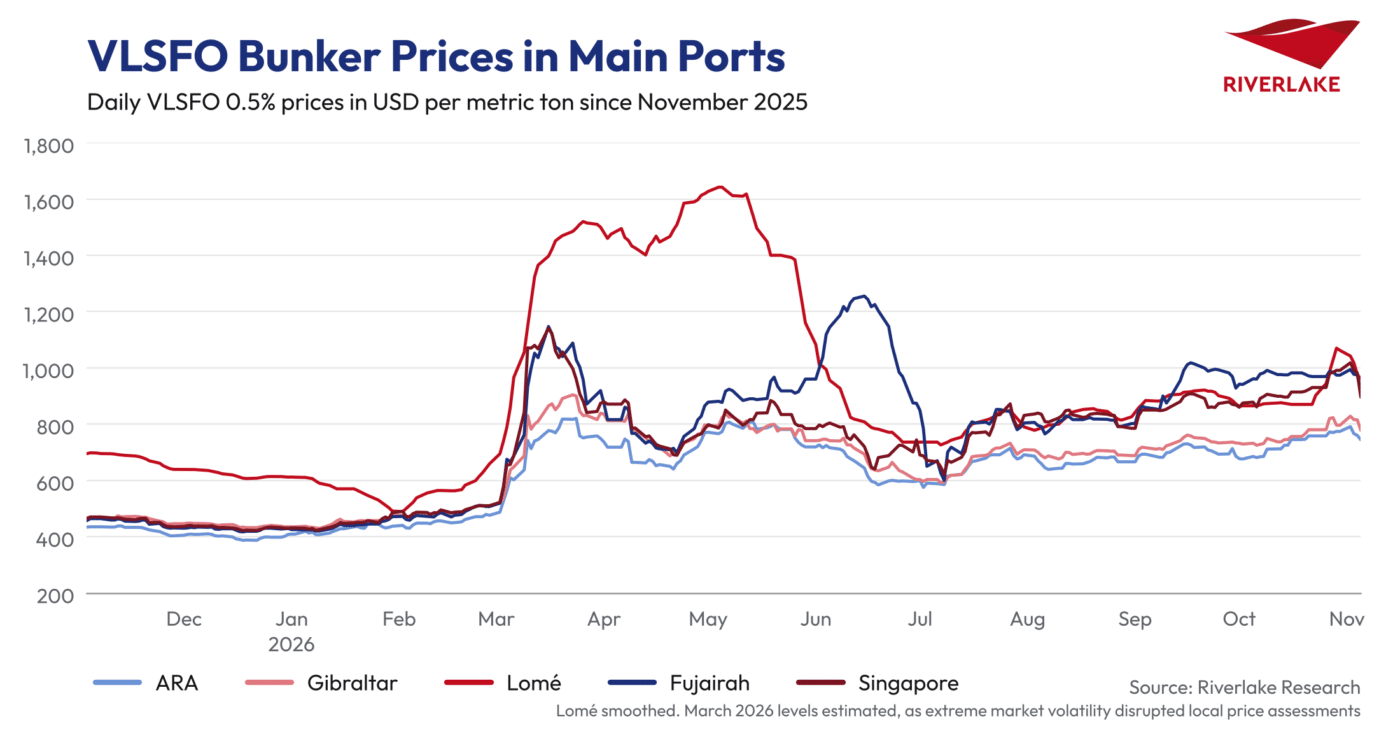
Our bunker data across key ports tells the story, comparing early November 2025 with today:
ARA: VLSFO up 71% to $744 per metric ton, LSMGO up 96% to $1,381.
Fujairah: the hardest hit of the main hubs, with VLSFO doubling to $919 and LSMGO up 121% to $1,640.
Singapore: VLSFO up 93% to $896 and LSMGO up 72% to $1,251.
Gibraltar: VLSFO up 67% to $778 and LSMGO up 94% to $1,474.
Lomé: VLSFO climbed above $1,600 in May, about twice the level seen in ARA at the time.
What stands out is how long it has lasted. Before the crisis, VLSFO in ARA never went above $479 per metric ton. Since 5 March, it has never gone below $575. Extreme prices have become the new normal, and one of the factors behind this year’s surge in freight rates.
Is relief in sight? It is too early to say. Brent has dropped from around $115 last week to below $100, as markets priced in a better chance of easing tensions following the Democrats’ midterm victory. VLSFO has also fallen 6% to 12% since the start of November, but a few days do not make a trend, and prices remain far above last year’s levels.
From here, the market could go either way. Lasting de-escalation could bring bunkers and freight rates down from this year’s historic highs in 2027. Renewed tensions could just as quickly send them back up. As 2026 has shown, this market can change overnight.
The question is no longer “how high can bunkers go?” but “how long will they stay here?”
Questions on the numbers? Let’s talk: research@riverlakegroup.com
by David Gailloud